The Best Fluffy Pancakes recipe you will fall in love with. Full of tips and tricks to help you make the best pancakes.

This recipe uses a proper béchamel base, a carefully chosen three-cheese blend, and a handful of flavor-building techniques that transform simple ingredients into something that tastes like it came from a seriously good restaurant kitchen. No processed cheese slices. No powdered flavoring. No shortcuts that compromise the result.
Just pure, honest, velvety homemade mac and cheese the way it’s supposed to taste. Whether you serve it stovetop (silky and saucy) or baked with a golden panko crust, this is the only mac and cheese recipe you’ll ever need.
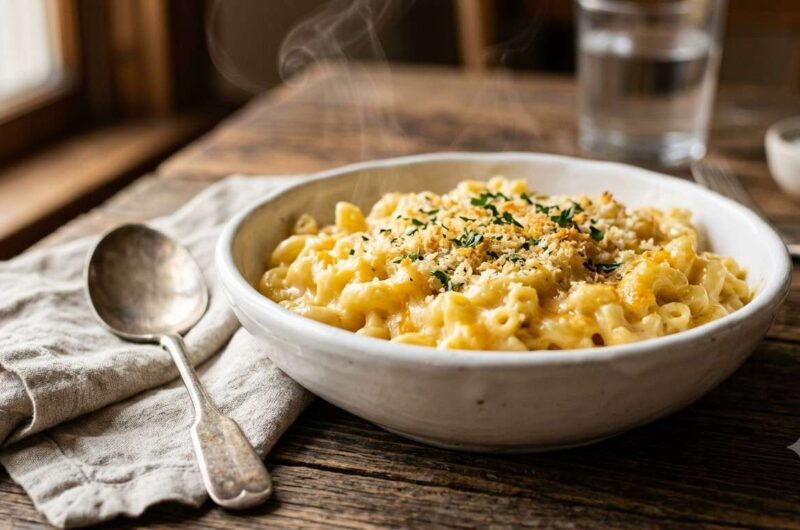
Homemade Mac and Cheese from Scratch The Creamiest Recipe You’ll Ever Make
Course: Main Course / Side DishCuisine: AmericanDifficulty: EasyServings
6
servingsPrep time
15
minutesCooking time
25
minutesCalories
580
kcalIngredients
- For the Mac and Cheese
1 lb (450g) elbow macaroni (or cavatappi, shells, or rigatoni)
4 tablespoons (57g) unsalted butter
¼ cup (30g) all-purpose flour
3 cups (720ml) whole milk, warmed
1 cup (240ml) heavy cream
2 cups (200g) sharp cheddar, freshly grated
1 cup (100g) Gruyère, freshly grated
½ cup (120g) cream cheese, softened and cubed
1 teaspoon Dijon mustard
½ teaspoon garlic powder
¼ teaspoon smoked paprika
¼ teaspoon cayenne pepper (adjust to taste)
Salt and white pepper to taste
1 cup reserved pasta water
- For the Baked Topping (Optional)
½ cup (40g) panko breadcrumbs
2 tablespoons melted butter
¼ cup (25g) freshly grated Parmesan
½ teaspoon smoked paprika
Directions
- Step 1: Salt Your Water Generously
- Bring a large pot of water to a boil. Salt it heavily it should taste like mild seawater. Cook macaroni until 2 minutes shy of al dente. Before draining, reserve 1 full cup of the starchy pasta water. Drain but do not rinse.
- Step 2: Make the Roux
- In a large heavy-bottomed saucepan over medium heat, melt the butter until foaming. Add flour all at once and whisk constantly for exactly 2 minutes. The roux should turn a pale golden color and smell lightly nutty. This cooking time removes the raw flour taste — don’t rush it.
- Step 3: Build the Béchamel
- With the pan still over medium heat, add the warmed milk in a slow, steady stream while whisking constantly. Once all the milk is in, add the heavy cream. Continue whisking and cooking for 5–7 minutes until the sauce is thick enough to coat the back of a spoon. When you draw a finger across the coated spoon and the line holds clearly, the béchamel is ready.
- Step 4: Season the Sauce
- Remove from heat. Stir in Dijon mustard, garlic powder, smoked paprika, cayenne, salt, and white pepper. Taste and adjust the sauce should be well-seasoned at this stage since the pasta will dilute the flavors slightly.
- Step 5: Add the Cheese
- Keep the pan off the heat or on the very lowest setting. Add the cream cheese first, stirring until fully melted. Then add the cheddar and Gruyère in three separate additions, stirring until fully melted between each. The sauce will become deeply glossy and smooth. Never return to high heat once the cheese is in.
- Step 6: Combine and Serve
- Add the drained macaroni to the cheese sauce and fold to coat every noodle. If the sauce feels too thick, add reserved pasta water a splash at a time. Taste for seasoning, adjust, and serve immediately in warm bowls.
Notes
- For an even crunchier topping, broil for the final 2–3 minutes. Watch closely it goes from golden to burned very quickly.
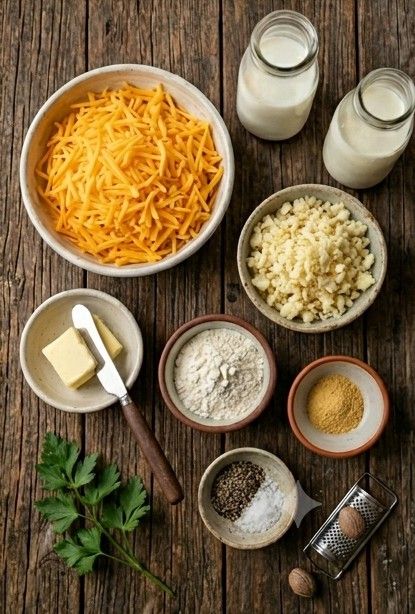
Baked Mac and Cheese Method
The baked version adds a golden, crunchy panko crust that contrasts beautifully with the creamy interior. The technique is identical to the stovetop version only the final step changes.
- Preheat oven to 375°F (190°C) and butter a 9×13-inch baking dish.
- Complete the stovetop recipe through Step 6 but keep the sauce slightly looser than you normally would by adding an extra splash of pasta water. It will thicken further in the oven.
- Transfer the mac and cheese to the prepared baking dish.
- Mix panko breadcrumbs, melted butter, Parmesan, and smoked paprika in a small bowl. Spread evenly over the top.
- Bake uncovered for 20–25 minutes until the topping is deep golden and the edges are bubbling.
- Let rest 5 minutes before serving the sauce settles and portions more cleanly.
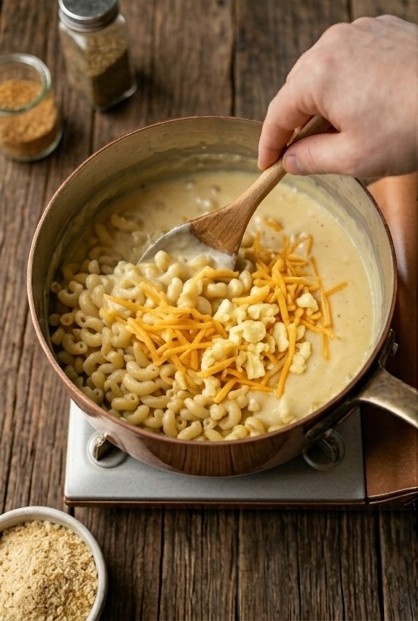
Why This Recipe Works
The Roux The Foundation of Everything
A properly made roux (butter + flour cooked together) gives this mac and cheese its body. It creates a sauce that is thick, glossy, and stable one that clings to every curve of every noodle rather than pooling at the bottom of the bowl. Skip the roux and you get a thin, greasy sauce that separates on contact with the pasta.
Warm Milk Not Cold
Adding cold milk to a hot roux creates lumps instantly. Warmed milk blends in seamlessly, producing a silky béchamel in minutes. This single step separates consistently smooth homemade mac and cheese from the lumpy kind.
The Three-Cheese Strategy
No single cheese does everything well. Cheddar brings sharpness and flavor; Gruyère adds nuttiness and smooth meltability; cream cheese contributes body and that unmistakable silky richness that makes the sauce feel luxurious. Together they create a depth of flavor that single-cheese versions simply cannot achieve.
Undercook the Pasta
Cooking the pasta 2 minutes shy of al dente and finishing it in the sauce means the noodles absorb the cheese sauce rather than just sitting in it. The result is mac and cheese where every bite has cheese all the way through not just coating the outside.
Never Boil the Cheese Sauce
High heat causes cheese proteins to seize and fat to separate, producing a grainy, oily sauce. Once the cheese goes in, the heat goes off. Patience at this stage is what keeps the sauce perfectly smooth.
The Cheese Guide What to Use and Why
| Cheese | Role | Flavor | Meltability | Best Substitute |
|---|---|---|---|---|
| Sharp Cheddar | Primary flavor | Tangy, bold | Good | Extra sharp cheddar, Colby |
| Gruyère | Smoothness + nuttiness | Nutty, complex | Excellent | Emmental, Comté, Fontina |
| Cream Cheese | Silky body | Mild, creamy | Excellent | Mascarpone |
| Parmesan (topping only) | Flavor punch on crust | Sharp, salty | Good (surface) | Pecorino Romano |
One rule above all: Always grate your own cheese from a block. Pre-shredded cheese contains cellulose and anti-caking agents that prevent smooth melting and make sauces gritty. Freshly grated cheese melts in seconds and produces a flawless sauce every single time.
Variations and Add-Ins
| Variation | What to Add or Change | Result |
|---|---|---|
| Bacon Mac | Fold in ¾ cup crispy crumbled bacon | Smoky, salty, universally loved |
| Lobster Mac | 1½ cups cooked lobster + Fontina + splash of dry sherry | Restaurant showstopper |
| Buffalo Chicken | 2 cups shredded chicken tossed in buffalo sauce | Spicy, bold, crowd-pleaser |
| Truffle Mac | 1 tsp truffle oil stirred in at the end | Luxurious and deeply savory |
| Roasted Broccoli | Fold in roasted florets before serving | Texture contrast, great nutrition |
| Smoky Mac | Swap cheddar for smoked cheddar + smoked Gouda | Deep, campfire-like richness |
| Jalapeño Mac | 2 roasted diced jalapeños + pepper jack cheese | Spicy kick, great heat balance |
| Dairy-free | Oat milk + dairy-free butter + dairy-free cheddar | Still creamy and satisfying |
Storage and Reheating Guide
| Method | Duration | Best Reheating Approach | Notes |
|---|---|---|---|
| Refrigerator (covered) | Up to 4 days | Stovetop with splash of milk, low heat, stirring constantly | Always add milk pasta absorbs sauce as it sits |
| Freezer (airtight) | Up to 3 months | Thaw overnight in fridge, reheat on stovetop with milk | Baked version freezes best |
| Microwave (single serving) | Same day | 50% power, 60-second intervals, stir between each | Never full power breaks the sauce |
| Baked version (fridge) | Up to 4 days | Oven at 350°F, covered foil 20 min, uncover last 5 min | Topping stays crispier than stovetop reheat |
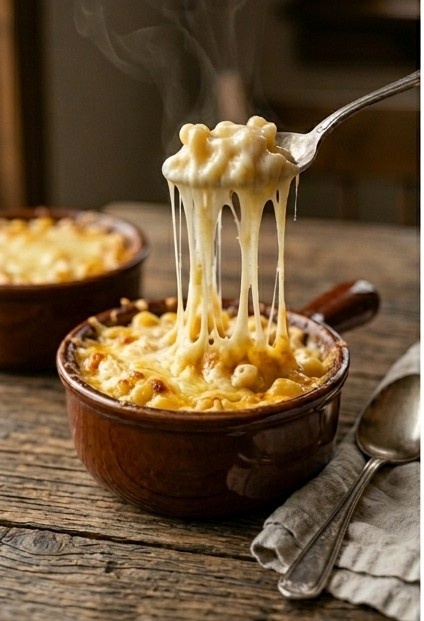
Stovetop vs Baked Side by Side
| Feature | Stovetop | Baked |
|---|---|---|
| Texture | Silky, saucy, ultra-creamy | Creamy inside, crispy golden crust |
| Total time | ~35 minutes | ~60 minutes |
| Best served | Immediately | 5 minutes after oven |
| Make-ahead | Moderate | Excellent |
| Feeds a crowd | Good | Excellent holds shape when portioned |
| Reheats well | With milk on stovetop | Excellently in oven |
| Wow factor | ⭐⭐⭐⭐ | ⭐⭐⭐⭐⭐ |
Verdict: For weeknight dinners, go stovetop it’s faster and impossibly creamy. For entertaining or feeding a crowd, bake it. Both versions use the exact same base recipe.
Nutrition Information
Per serving (based on 6 servings). Values are approximate and vary by ingredients used.
| Nutrient | Per Serving |
|---|---|
| Calories | ~580 kcal |
| Total Fat | ~28g |
| Saturated Fat | ~16g |
| Carbohydrates | ~58g |
| Sugar | ~5g |
| Protein | ~24g |
| Fiber | ~2g |
| Sodium | ~620mg |
Frequently Asked Questions
Why is my mac and cheese sauce grainy?
Grainy sauce is almost always caused by using pre-shredded cheese, adding cheese over too-high heat, or adding all the cheese at once. Use freshly grated cheese, keep the heat very low once cheese goes in, and add it in three separate batches, stirring fully between each.
Can I make this ahead of time?
Yes, the baked version is ideal for making ahead. Assemble completely without baking, cover tightly, and refrigerate up to 24 hours. Add the breadcrumb topping just before baking and add 5–10 minutes to the bake time since it goes in cold.
What’s the best pasta shape for mac and cheese?
Elbow macaroni is classic and works perfectly. Cavatappi and medium shells hold even more sauce and are excellent alternatives. For baked versions, shells are particularly good because sauce pools inside each one. Avoid long pasta shapes they don’t hold sauce as effectively.
Can I use low-fat milk instead of whole milk?
You can, but the sauce will be less creamy and more prone to breaking. Whole milk and heavy cream provide the fat content that keeps the emulsion stable. If reducing fat, use 2% milk but keep all the cream.
How do I keep mac and cheese creamy for a party or potluck?
Keep it in a slow cooker on the u0022warmu0022 setting. Add a splash of whole milk every 30–45 minutes and stir gently. This prevents the sauce from drying out or developing a skin.
Can I make this gluten-free?
Yes substitute the all-purpose flour with a 1:1 gluten-free flour blend for the roux, and use your preferred gluten-free pasta. The sauce technique remains identical. Watch the pasta cook time carefully GF pasta can get mushy quickly.
Why does my mac and cheese get dry when reheated?
The pasta continues absorbing sauce as it cools. Always add 2–3 tablespoons of whole milk per serving before reheating, and use low heat while stirring constantly. Never microwave on full power it causes the sauce to separate.